Ruzzle
- 4.0
- Rating
- 500.00K
- Installs
- $4.99
- Price
 Analysis by App-foxy
I have always liked word games that make me think quickly rather than slowly build a crossword. Ruzzle takes that faster approach: it is a competitive word game from MAG Interactive in which the challenge is not simply knowing words, but spotting them, forming them, and making decisions before the round gets away from me. After spending time with it, I see why it appeals to people who want a short mental workout that can also become surprisingly competitive.
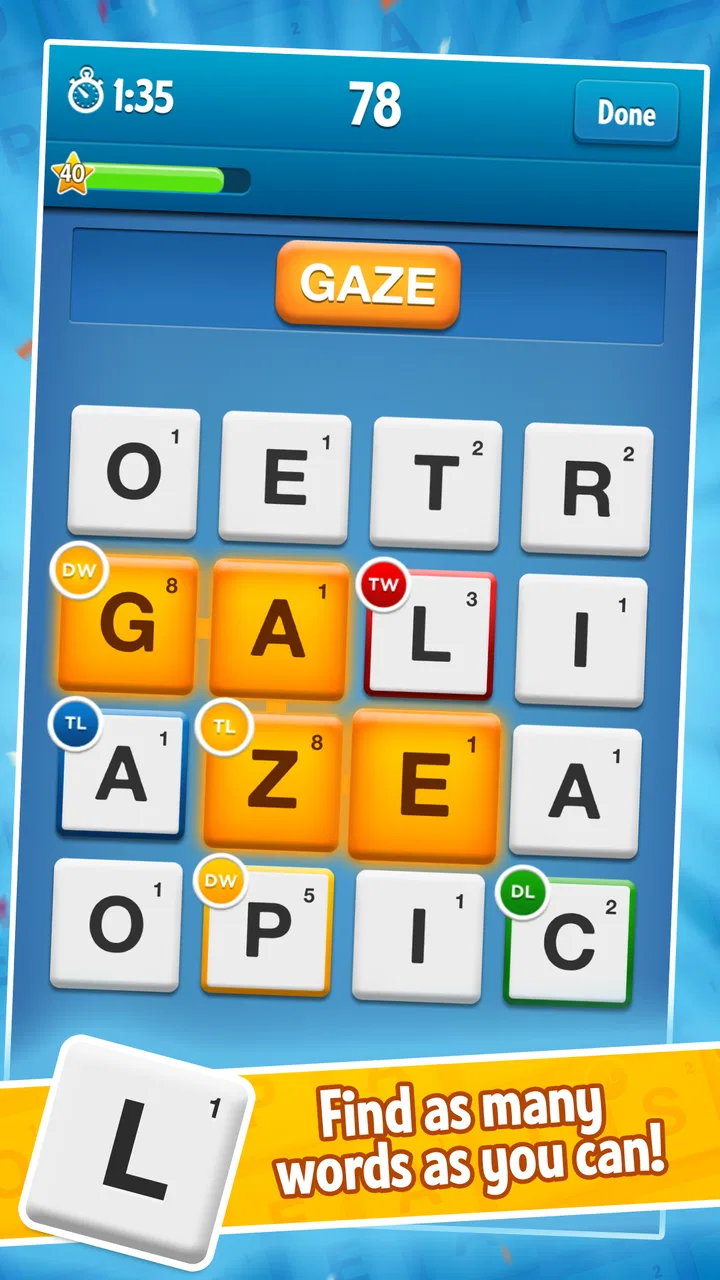
The most important thing to understand is its pace. This is not a quiet vocabulary exercise where I can stare at one clue for several minutes. The appeal comes from scanning a crowded letter board, noticing possible combinations, and trusting my first good idea before another player finds it. That makes each session feel active, even when I only have a little time available.
How the game feels in everyday play
At its core, Ruzzle belongs to the word-game category, but it feels closer to a timed visual puzzle than to a traditional crossword. I am looking across connected letters and trying to build as many useful words as possible. The board rewards both vocabulary and movement: recognizing a long word matters, yet finding several shorter words efficiently can be just as important.
You May Also Like

 Blood Strike: 2.5 Anniversary
Blood Strike’s Loadouts Turn Every Drop Into a Tactical Gamble
A close look at Blood Strike’s custom loadouts: how fast access to signature weapons reshapes its battle royale rhythm, rewards preparation, and narrows the gap between fights.

 Pandora - Music & Podcasts
Pandora’s Music Is Easy to Start, but Harder to Recover
Pandora’s strength is its low-effort path from a seed to a station. Its weak spot is how much confidence it asks you to place in connection, setup, and quiet recovery.

 8 Ball Pool
 Is Built on Rivalries, Rematches, and Routine
A close look at the rivalries, rematches, shared routines, and unanswered safety questions that turn a quick pool match into a persistent mobile community.

 Samsung Music
’s Quiet Strength Is Playing What You Already Own
Its reach comes less from spectacle than from dependable access to a personal library. That simplicity is both the app’s strongest retention engine and its ceiling.

 AccuWeather: Weather Radar
AccuWeather Review: A Quick, Clear Forecast for Everyday Decisions
For everyday plans, the best forecast is the one you can understand quickly. AccuWeather makes rain timing, radar, and local conditions easy to act on, with a few trade-offs.

 Hill Climb Racing
Why Hill Climb Racing Still Turns Crashes Into One More Run
A tiny car, a bumpy hill and one more upgrade: Hill Climb Racing keeps resurfacing because its simple chaos makes every near-miss feel personal.
More From Our News Desk



That combination gives the game a nice tension. I can begin with an obvious word, then notice that the same letters open a route toward something longer. Sometimes the best decision is to stop chasing an ambitious word and collect several reliable ones instead. The game therefore tests judgment as much as language knowledge, which is one reason repeated rounds do not feel exactly identical.
A realistic use case is a short break between errands. I can play a round while waiting for a friend, then put the phone away without needing to remember a complicated story or unfinished level. It also works well when I want something more engaging than scrolling but less demanding than a full strategy game. The quick format makes it easy to fit into small gaps in a day.
The competitive structure changes the mood, though. Even when I am playing casually, a score creates a reason to improve my choices. I start paying attention to how quickly I recognize patterns, whether I waste time exploring unlikely letter paths, and how often I overlook simple words near the edge of the board. That self-correction is where much of the lasting interest comes from.
One useful habit is to scan the entire board before committing to a long word. My first instinct is often to follow the most visible combination, but a wider glance can reveal a cluster of shorter words that is more valuable for that particular round. I also find it helpful to look for common beginnings and endings rather than searching randomly. This reduces hesitation and makes the timer feel less overwhelming.
A word game that rewards speed and restraint
Fast play does not mean touching the screen constantly. In my experience, frantic swiping can be less effective than a brief pause to map the nearby letters. The strongest rounds usually come from balancing speed with restraint: I move quickly when a word is clear, but I do not spend too long forcing a doubtful path.
That balance is a concrete difference from many crossword-style alternatives. A crossword generally gives me a clue and lets me reason toward a single answer. Ruzzle gives me a field of possibilities and asks me to prioritize. A word-search game may focus on finding hidden entries, while this one adds pressure through the need to keep making decisions. Players who enjoy anagrams, Boggle-like boards, or timed vocabulary challenges will probably understand the appeal immediately.
There is also a useful distinction between playing for language practice and playing for competition. The game can encourage me to notice unusual word shapes and become more flexible with letters, but it is not a structured course. Someone looking for definitions, pronunciation guidance, or lessons arranged by difficulty would likely be better served by a dedicated vocabulary app. Here, learning happens indirectly through repeated exposure and experimentation.
For me, the most interesting improvement comes from reviewing mistakes mentally after a round. If I lose, I try to remember whether the problem was vocabulary, board scanning, or poor time management. That diagnosis matters. A player who knows many words may still underperform because they spend too long on one possibility, while a player with a smaller vocabulary can compensate by finding dependable short words quickly.
What the cost means before you install
The listed price is $4.99, so I would treat this as a paid purchase rather than assume it is simply a free download. That distinction matters when comparing it with the many free word games available on Android and iOS. The purchase can make sense for someone who already knows they enjoy this style of play, but a person who is only curious may want to think carefully before paying.
There are also in-app purchases ranging from $0.49 to $99.99 per item. I would not judge the value by the entry price alone; I would also consider how comfortable I am with optional spending inside a game I may play repeatedly. The broad range means the final cost can depend on personal choices, so I would check the purchase screen carefully and avoid treating every available item as necessary.
From a value perspective, the strongest case is repeat use. A word game earns its place on my phone when I return to it in short sessions over weeks, not when it entertains me once and disappears. Ruzzle has the kind of quick competitive loop that can support that habit, especially for players who enjoy trying to beat a previous result or challenge other people.
The weaker case is for someone who wants a large amount of content in a single sitting. This is a focused word challenge rather than a broad adventure with a campaign, characters, or a changing world to explore. If I want narrative progression, elaborate presentation, or a relaxed puzzle with no pressure, my money may be better spent elsewhere.
Its age rating is Everyone, which fits the straightforward word-game concept and makes it a reasonable choice for mixed-age households. Still, the competitive pace may not suit every younger player, particularly someone who finds timers frustrating. I would introduce it as a quick vocabulary puzzle rather than promise a calm educational experience.
Where it works well and where it can frustrate
The biggest strength is immediacy. I can understand the basic goal quickly, yet improvement takes time because better results depend on board awareness, word familiarity, and efficient movement. That is a good design balance for me: the rules are approachable, but strong play is not automatic.
Another strength is the way it turns ordinary letters into a visual search problem. I am not waiting for inspiration from a clue. I am actively examining relationships between neighboring tiles and deciding which route deserves attention. This makes the game feel physical and responsive, even though the underlying task is linguistic.
The main limitation is that speed can overshadow enjoyment. On a tired day, I may know the right word but fail to act quickly enough. A slower word puzzle lets me appreciate the language itself, while Ruzzle can make vocabulary feel like a race. That is not a flaw for its intended audience, but it is a real reason some players will prefer an alternative.
Another trade-off is the competitive mindset. Scores can motivate me to learn better patterns, but they can also make a casual break feel like another performance test. If I am playing to relax, I may prefer a crossword, a daily word puzzle, or an untimed anagram game. Ruzzle is at its best when I actively want the pressure of a clock and an opponent.
Screen size can affect comfort as well. On a smaller phone, crowded letter arrangements may require more careful tapping, especially when I am trying to move quickly. A larger display gives me more visual breathing room. This is one of those practical details that is easy to overlook in a store description but matters during repeated play.
I also recommend setting a personal spending boundary before exploring optional purchases. The listed paid access and the separate in-app purchase range should be considered together. If I am buying the game for a child, I would make sure the device's purchase controls match the household's expectations. That is sensible with any game offering purchases, but it is especially important when the available amounts vary widely.
Small techniques that improve the experience
My first practical tip is to divide the board into zones. I scan the upper area, center, and lower area instead of letting my eyes jump without a plan. This makes overlooked letters easier to find and prevents me from repeatedly returning to the same attractive combination. It is a simple workflow, but it makes short rounds feel more deliberate.
My second tip is to build from familiar fragments. Common prefixes, suffixes, and plural endings can help me extend a word after I have found its base. I do not assume every possible extension will be accepted, but checking nearby letters for a natural ending is often more efficient than starting a completely new search.
Third, I try not to spend the entire round hunting for one spectacular word. A long entry feels satisfying, but it can consume the time needed to collect several dependable options. When the board is difficult, consistency is usually a better goal than perfection. This is a particularly useful adjustment for players who know plenty of words but struggle with the clock.
Finally, I treat each loss as information rather than proof that I lack vocabulary. If I missed many easy words, I need a better scanning routine. If I found words but moved slowly, I need to simplify my choices. If I repeatedly chased obscure possibilities, I need to trust clear options sooner. That way, the game becomes a small exercise in decision-making instead of a simple test of who knows the most words.
Who will get the most from it
Ruzzle is a strong match for people who enjoy word games but want more urgency than a standard crossword provides. It suits commuters, students looking for a brief mental change of pace, friends who like comparing results, and experienced puzzle players who want to sharpen visual word recognition. It is also a good pick for someone who prefers several short sessions to one long game.
The developer, MAG Interactive, has positioned it as a fast word game, and that description matches my experience better than calling it a conventional vocabulary app. The game is about performance under time pressure. I can still enjoy it casually, but its identity becomes clearer when I embrace the competitive rhythm rather than try to turn it into a slow study tool.
The audience size also suggests that it has found a substantial community: the listing shows over 500 thousand installs, along with a 4.0 average from around 38 thousand ratings and about 6.2 thousand written reviews. I would not use those figures as a guarantee that I will love it, but they do indicate that the format has attracted consistent interest.
I would skip it if I dislike timers, feel anxious about score comparisons, or want every puzzle to teach something in a clearly organized way. I would also look elsewhere if I expect a free experience without any possibility of additional spending. A traditional crossword app, a relaxed anagram game, or a structured vocabulary trainer may be a better fit depending on that priority.
Compatibility and the practical buying decision
The current version is 4.1.3, and it requires Android 7.0 or later. That makes checking the operating system worthwhile before purchasing, particularly if I am using an older phone or tablet. The game is listed for Everyone, and the straightforward word format is easy to understand, but device compatibility still determines whether the experience is available to me in the first place.
For a person deciding whether to buy, I would frame the question this way: will I return to short, fast word rounds often enough to justify the listed $4.99 price? If yes, the focused design can offer good value because the same basic idea remains replayable through different letter arrangements and personal goals. If no, a free alternative may be the safer choice, especially when I am not interested in competing or improving over time.
I would also separate the value of the core game from optional purchases. The paid price is the clearest cost to consider, while the in-app purchase range means I should make deliberate choices rather than spend automatically. I do not need to purchase every available item to understand the game's appeal; the important question is whether the main word-play loop itself is enjoyable enough to support regular use.
My final view is positive, with a clear condition: Ruzzle is worth considering when I want a quick, competitive word challenge, not when I want a quiet crossword or a formal language lesson. I like the way it rewards scanning, speed, and sensible risk-taking, and I appreciate that a short break can still feel like a complete session.
My recommendation is to buy it if fast word play is already your kind of puzzle and you are comfortable with the listed cost and optional purchases. I would skip it if you need an untimed experience or want guaranteed educational structure. For the right player, it is a compact game with enough tactical depth to keep a familiar letter board interesting long after the first round.
FAQs for Ruzzle
01What is Ruzzle and how is the game played?
Ruzzle is a fast-paced word puzzle game in which you search for words on a grid of mixed letters. You connect adjacent tiles horizontally, vertically, or diagonally to create words, then submit as many valid combinations as possible before the timer ends. Games are designed to be quick, competitive, and easy to replay.
02Can I play Ruzzle offline?
Ruzzle is primarily designed around online play, especially when you want to challenge friends, compete against other players, or use features connected to your account. Some practice or solo options may be available depending on the version and device, but the full multiplayer experience generally requires an internet connection. Check the current app listing for the latest offline limitations.
03Is Ruzzle free to download and play?
Ruzzle can generally be downloaded for free, allowing players to start playing without paying an upfront purchase price. However, the game may include advertising, optional in-app purchases, or premium features that improve convenience or remove certain restrictions. Review the store page and your device’s purchase settings before downloading, particularly if children may use the app.
04Does Ruzzle support multiplayer games with friends?
Yes, multiplayer competition is one of Ruzzle’s main attractions. You can typically play against friends or other users in timed word challenges and compare scores after the rounds are completed. Depending on the current version, matchmaking, invitations, leaderboards, and account-based features may require signing in or granting access to certain online services.
05Is Ruzzle suitable for children and beginners?
Ruzzle is easy to understand, but success depends on vocabulary, spelling, speed, and familiarity with word-game strategies. It can be suitable for older children and adults, although parents should review the game’s online interaction, advertising, and purchase options before allowing unsupervised use. Beginners can start comfortably with short words and gradually learn scoring patterns and bonus tiles.
Pros
- Fast
- addictive word rounds that are easy to start anywhere.
- Supports multiple languages for a wider range of players.
- Useful practice for spelling
- vocabulary
- and quick pattern recognition.
- Online matches add a competitive challenge against friends or strangers.
- Short games fit well into commutes or brief breaks.
Cons
- Timed gameplay can feel stressful rather than relaxing.
- Strong players may create a steep difficulty gap for beginners.
- Some features and extras may depend on in-app purchases.
- Requires an internet connection for many multiplayer functions.
- Repeated boards and match formats can become monotonous over time.

Ruzzle
Gallery